TEAM ROLES
We have a variety of operational and non-operational functions and roles:
We train and qualify members to undertake a variety of roles
Base Qualification for ALL Operational Members
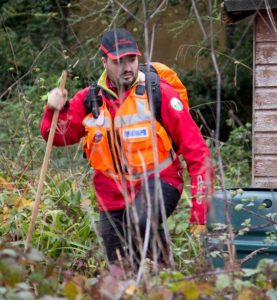
The Search Technician is the primary qualification every member of Kent Search & Rescue must hold.
The Search Technician has the responsibility of turning up at a search with the apropriate clothing and equipment and be fit and well enough to go out and search for the missing person in the search tasking they have been given.
Search Technicians should also look out for each other and their Team Leader.
A Search Technician is qualified to Lowland Rescue National Standards and needs to be competent in the key aspects of search including navigation, radio operation, first aid, scenes of crime preservation and rescue techniques.
In the early days a Search Technician will be supported and coached at all times by their fellow experienced Search Technicians as well as their Team Leader. At all times Search Technicians must take and receive direction from their Team Leader.
The Search Technician needs to learn and become proficient in many soft skills such as being able to give briefings, work in a team, interviewing / gathering information from third parties, handling difficult / sensitive situations, ensuring care of team members before, during and after the search as well as being able to de-brief with the team at the end of the search.
All Search Technicians will be trained to search within Foot Search Teams and be able to perform the following roles within these teams:
-
- Radio Operator (trained to use two-way radios & airwave)
- Medic (holds the required first aid qualification)
- with further training and experience Team Leader
Search Technicians can also participate in these teams once training has been successfully completed:
Qualification for any member Leading a Team
 The Team Leader has the responsibility of completing the search task given by the Search Manager and the welfare of the team whilst this task is performed.
This involves ensuring the team is fit and well to perform the task, adequately equipped and to get a brief from the Search Managerand translate this to the members.
The team will typically be made up of 4 search technicians including:
- Team Leader
- Radio Operator
- Medic
- Search Technicians
The Team Leader is qualified to the Lowland Rescue National Standards and needs to be proficient in all aspects of search including navigation, radio operation, first aid, scenes of crime preservation and rescue techniques.
The Team Leader may have experienced members as well as those that are less expereinced in their team so they need to be able to coach members in their role during the search.
The Team Leader also needs to be proficient in many soft skills such as being able to give briefings, manage the team, interviewing / gathering information from third parties, handling difficult / sensitive situations, ensuring care of the team before, during and after the search as well as de-brieifing the team at the end of the search.
Moreover the Team Leader needs to be proficient to be able to deal with finding a Missing Person, regardless of the condition they are found in.
Finally the Team Leader needs to brief the Search Manager on the aspects of their team’s search and complete all associated paperwork.
The Team Leader can also lead these teams once qualified in that discipline:
- Bank Search Team
- Boat Search Team
- Drone Search Team
- Dog Search Team
- Flood First Responder Search Team
- Mountain Bike Search Team
- Sonar Search Team
Overall responsibility for establishing and developing a search plan as part of the search management team
 The Search Planner (sometimes referred to as the First Responder) is an experienced Search Technician and ideally a Team Leader or potential Team Leader.
The role of the Search Planner is to assist the Search Manager at the start of the search to develop a search plan and to develop that plan as the search continues.
During the initial phases of a search the Search Planner may work from home or work, where they can easily use a computer with access to the internet. However it may be necessary for the Search Planner to work on-site at the Control Point.
The Search Planner will receive a call from the Search Manager who will provide them with relevant information about the Missing Person. The Search Planner may immediately or after this stage liaise with the Police Search Advisor [POLSA].
The Search Planner will then determine a suitable Rendezvous Point (RV) for the whole of the Search Team to assemble and use the SMS System to issue a structured text message to alert the members of a search or potential search, brief details of the missing person plus the RV.
As Members reply to this message the Search Planner will be able to use the Search Management software to send an SMS to confirm what resources are available for the Search Manager.
The physical planning process involves the Search Planner looking at all the information they have about the missing person, reviewing this against missing person statistics to determine a series of possible scenarios as to where the missing person may have gone.
From these scenarios the Search Planner will create search tasks for each scenario according to their priority. These are all recorded ousing the search management software, which is then available online for the Search Manager and Search Controller, the whole search management team in fact.
As more information is received and teams are debriefed from the search tasks, the Search Planner will modify and develop the plan accordingly.
The Search Planner will generally use the search management software to:
- provide details of the Missing Person and maybe what they are wearing
- details of the RV and where to park
- request certain members to approach on specific routes to visual search en-route
- despatch certain resources direct to search areas
- provide other vital information
- manage and monitor responses
- provide vital information to search technicians
- stand down or suspend a search
Overall responsibility for managing the physical search activity in order to implement the search plan as part of the search management team
 The Search Controller works in the Control Point [CP] with the Control Vehicle as their base in support of the Search Manager and Kent Police Search Advisors (POLSA).
The function of the Search Planner includes:
- make sure all members in attendance are signed in & out
- manage radio communications or use a Radio Controller
- operate all mapping and search related software systems
- to monitor availability and allocation of resources
- record all communications between control, search teams and other resources
The Search Controller will manage the setup of the Control Point; site and start the generator for power, connect and raise the radio antennae, start up the computer, setup a cordon around the control point, make sure safety equipment is ready for issue to search teams (to be signed in & out by each search team). The Logistics Officer will assist or take over this function if available.
Once the search plan has been received from the Search Planner the Search Controller will utilise the search management software to arrange the resources available into Search Teams, allocate search activities from the plan to each team.
The Search Planner will also provide a briefing to each team regarding the details of the missing person, the situation, what search activity will be taking place and to make sure they are fit for deployment.
As search teams return from each search activity the Search Controller will organise a de-brief of that activity for the Search Planner and stand down or redeploy the team with another search activity.
Should the missing person be found the Search Controller will coordinate the rescue of them to a suitable place of safety where they can receive appropriate care and attention. This usually involves passing the missing person to the Ambulance Service or the Police.
The Search Controller may also be one of the official drivers that collects the Control Vehicle from its secure storage location, drives it to the search and returns it back to storage at the end of the search.
The Search Manager is in overall control of the search working with the Police Search Advistor
 The Search Manager has the overall responsibility for liaising with Kent Police Search Managers (POLSA) and coordinating the entire search acitviity and all the resources made available to them.
The Search Manager will work with the Search Planner and Search Controller determine a strategy for the search and therefore the areas that need to be searched. These areas will then be allocated as search tasks to the various search teams at their disposal.
The Search Manager is part of a search management team comprising themselves and where available:
- Search Planner
- Search Controller
- Search Management Software Operator
The Search Manager is qualified to the Lowland Rescue National Standards and needs to be proficient in all aspects of search and search strategy as well as the skills expected of a Team Leader.
Throughout the search activity the Search Manager must plan and direct all activities, responding to circumstances as they change and manage the Control Point, ideally with the assistance of a Search Planner and a Search Controller, although they are able to perform all these functions on their own as part of their role.
The Search Manager must ensure that a de-brief is received from each Team Leader when they complete their search tasking as this will play a part in determining how the search will proceed.
Finally the Search Manager must ensure all associated search related paperwork is completed and passed to the Police.