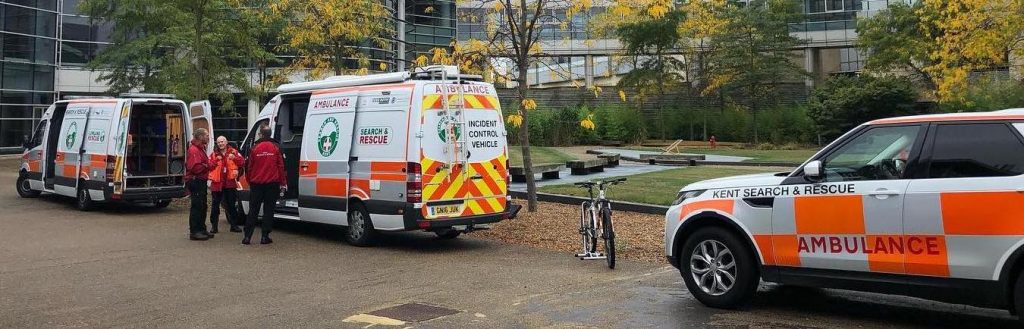
OUR SPECIALIST SEARCH TEAMS
See what assets we use to be able to find missing people anywhere in Kent
We deploy many different types of Search Teams
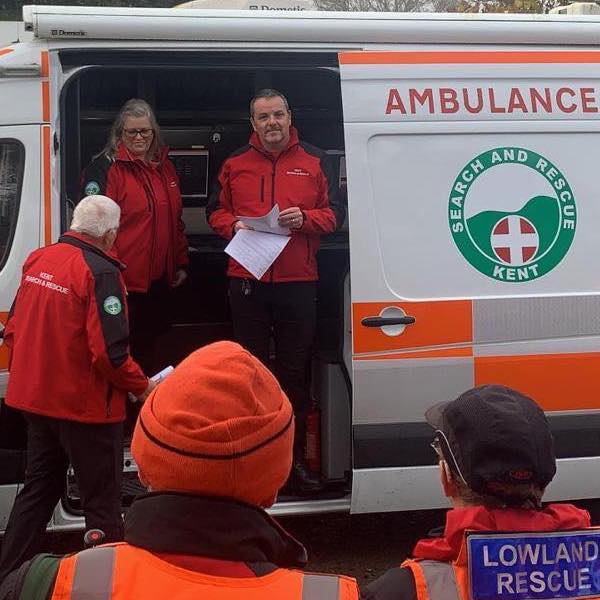
Foot search teams are a basic requirement for most searches
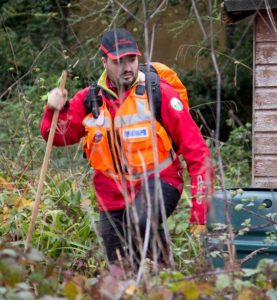 Foot Search Teams are used to search routes, paths, buildings, cemeteries, parks, fields, woodlands, rivers, ponds, canals, lakes, streams and much more.
Basically they have to search anywhere someone can go missing in public spaces.
They cannot search private domestic or commercial business premises and their surroundings without permission as this is all private property.
The search technician and therefore foot team is the backbone of KSAR search and rescue activities.
Every operational member needs to be qualified as a search technician that will primarily operate on foot in a foot team.
This team is made up of three to five, but usually four, search technicians that are qualified to Lowland Rescue national standards to undertake the roles of…
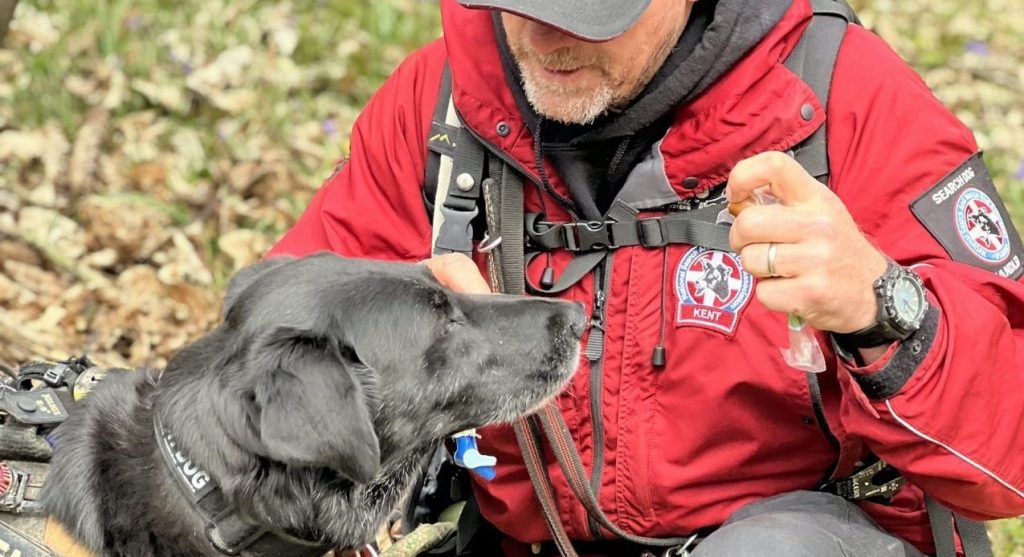
Dog search teams are a basic requirement for most searches
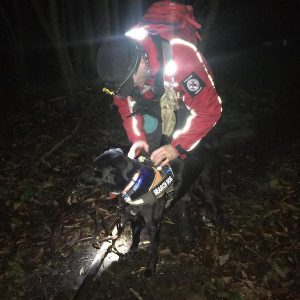 Dog search teams are used to search routes, paths and/or large areas quickly as the dog can cover large areas more quickly than a foot search team.
Typically a dog search team can do the equivalent work of 5 foot search teams. Therefore they are a major asset to most searches.
All Dog Handlers in Kent are qualified to the National Search and Rescue Dog Association [NSARDA] Lowland Search Dog Standards.
Currently all of the qualified operational search dogs in Kent are Air Scent Search Dogs. Other Dogs can be called in from across the UK including Scent Specific Trailing Search Dogs and Water Search Dogs.
To qualify to NSARDA Standards the Dog Team are also members of NSARDA Kent, one of the ten member Associations that make up NSARDA.
All Dog Handlers are required to be a minimum qualified Search Technician and recommended to be a qualified Team Leader to Lowland Rescue national standards.
 All Dog Support members are required to be a minimum qualified Search Technician and will ideally have been trained and qualified locally as a Dog Support. They are also recommended to become a qualified Lowland Team Leader.
This team is made up of two people…
- Dog Handler (Team Leader)
- Dog Support (Radio Operator, Medic & Search Technician)
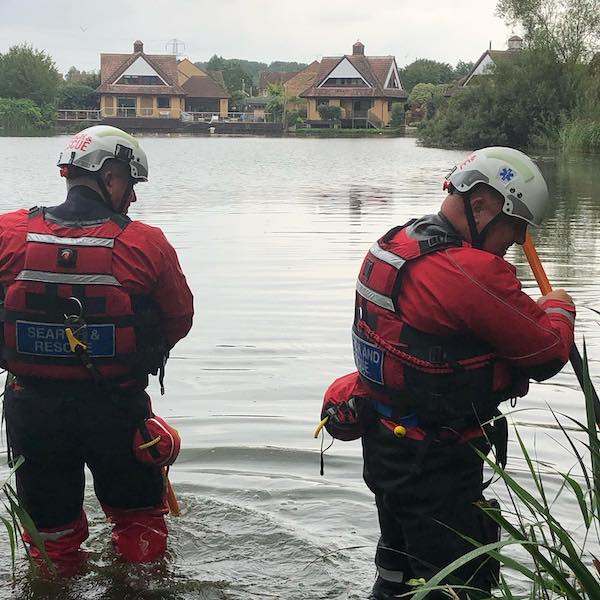
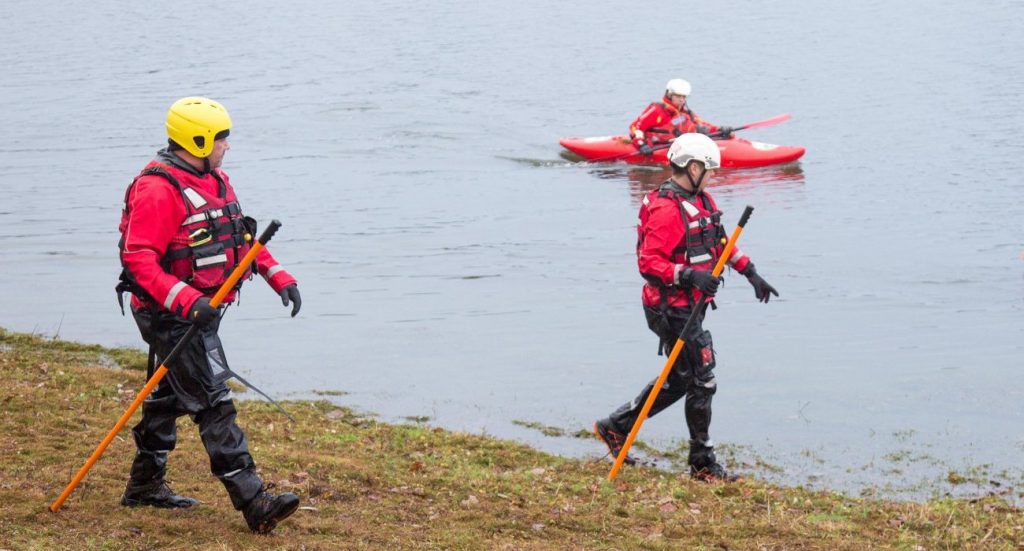
Bank search teams are required wherever we need to search water margins
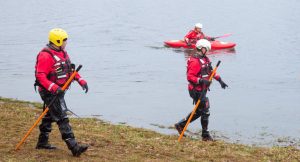 Bank Search Teams are made up of search technicians that have also qualified as a Bank Searcher, having successfully completed the Bank Search Course.
Bank Search Teams are used to search any water margins including streams, ponds, rivers, canals, lakes, reservoirs etc., basically wherever there is a search next to water.
Water margins appear on many of our searches here in Kent because we have a significant coast line, marshes such as you can find at Stodmarsh and the River Medway.
The bank search teams are critical to all foot based searches by water.
Where water is concerned teams work in zones, as follows:
- Cold zone – away from the water such that a trip, slip or fall would not result in them falling in the water;
- Warm Zone – could trip, slip or fall into the water;
- Hot Zone – no member should be in the hot zone unless they have accidentally fallen in.
Some members of the team operate in the warm zone searching the water margins and providing safety cover for each other to rescue either should anyone accidentally fall in. The members in the warm zone must be wearing the appropriate Personal Protective Equipment [PPE].
The remaining members operate in the cold zone.
Every operational bank searcher must be qualified as a bank search technician. Team Leaders must have also completed this training.
This team is made up of three to five, but usually four, search technicians that are qualified to Lowland Rescue national standards to undertake the roles of…
- Team Leader (searching & managing in the cold zone)
- Radio Operator (upstream spotter & searcher in the cold zone)
- Bank Search Technician / Medic (searcher or safety in the warm zone)
- Bank Search Technician (searcher or safety in the warm zone)
Flood First Responder search teams are a key requirement on most water based searches
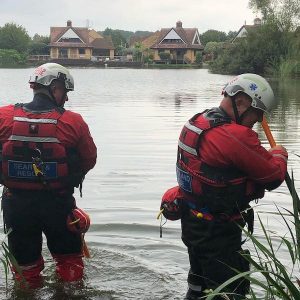 This team is made up of search technicians that have also qualified as a Flood First Responder, having successfully completed the Flood First Responder course plus the pre-requisite Water Awareness `and Bank Search Team courses.
The Flood Rescue Teams are used to search for persons that may have drowned or to work with the Local Authority Resiliance or the Fire And Rescue Service with localised flooding events to assist with the rescue of persons trapped by flood waters up to 1m deep with water moving no faster than 1m per second.
These qualified flood rescue technicians are also able to provide an additional resource to assist the Fire And Rescue Service in times of need when their resources are stretched.
Flooding is not such a rare occurrence in Kent as we have a significant coast line as well as canals, reservoirs, ponds, lakes and rivers.
The Team Leader will be a qualified Team Leader and also hold the appropriate qualification to the team they are leading.
The flood rescue teams always work in the Hot Zone and therefore always have to be wearing appropriate Protective Personal Equipment [PPE].
This team is made up of four search technicians that are qualified to the DEFRA standard for flood rescue and they would generally but not always follow the traditional foot team structure…
Mountain bike search teams are a key requirement for many searches
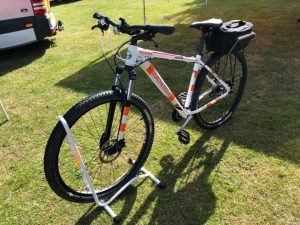 This team is made up of search technicians that have also qualified as a Mountain Bike Search Technician, having successfully completed the Bike Team course.
A Mountain Bike Team is often deployed to search along routes in order to cover considerable distances quickly or to catch up with a missing person that may be ahead of them.
The Mountain Bike Teams are particularly useful to search quickly, particular locations as well as to cover certain types of terrain.
A major asset of the Mountain Bike Team is to be able to quickly deploy crime scene, medical and safety equipment to foot, bank, dog and boat ∫ as well as seizing clues or evidence.
This team is made up of two people…
- Team Leader (management, Medic, Radio Operator, Search Technician and route master)
- Search Technician (Medic & Search Technician)
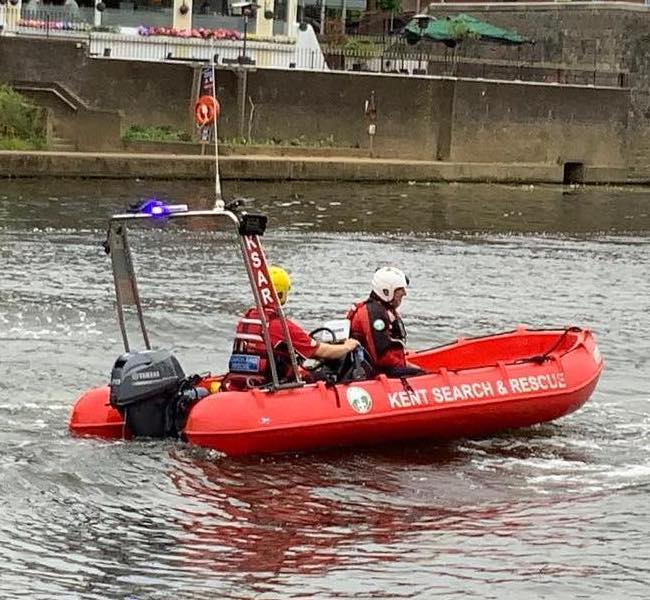
Boat search teams are required wherever we need to search bodies of water
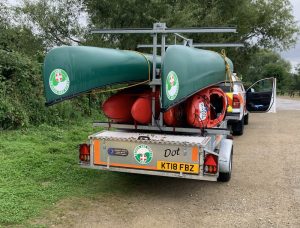 Boat Search Teams are made up of search technicians that have qualified as Boat Handlers, whether that be an inflatable boat (rib), a canoe or a kayak, and have also successfully completed the various relevant qualifications unique to each.
The boat search team uses Canoes, Kayaks, Inflatable and Rigid Power Boats to undertake searches of ponds, lakes, canals, reservoirs, streams, rivers etc.
Water plays a significant role in many of our searches here in Kent because we have a canal, reservoirs, marshes and a number of rivers.
The boat search teams are critical to all searches involving water.
The members of the team that handle the inflatable and rigid boats are made up of search technicians that have also qualified to the Royal Yachting Association (RYA) standards for Power Boat Level 2.
The members of the team that handle the canoes and the kayaks are made up of search technicians that have also qualified to the British Canoe Union (BCU) standards for Inland 2 Star (minimum) plus the Foundation Safety Rescue Training or equivalent.
The Team Leader will be a qualified Team Leader and also hold the appropriate qualification to the team they are leading.
The boat teams always work in the Hot Zone and thereafter always have to be wearing appropriate Protective Personal Equipment [PPE].
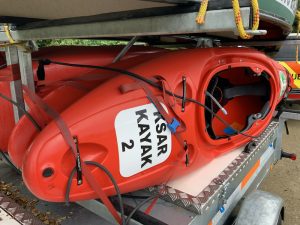
The boat search team can be made up of any number of craft. Generally the inflatable and rigid boats can operate independently or with the canoes and kayaks. The canoes and kayaks will usually work in teams of two or three and wherever practical be supported by an inflatable boat where practical.
Inflatable and rigid boats and canoes are manned by two search technicians…
- Boat Team Leader (searching, managing & navigation)
- Boat Search Technician (searching, radio operator & medic)
The kayaks are manned by a single individual thereafter they will both be a qualified kayak operator and at least one will be a Team Leader.
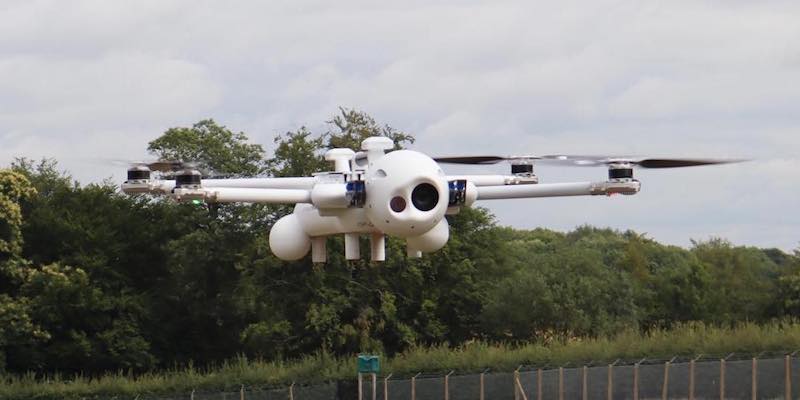
Drone search teams are required wherever we need search quickly, ascertain the terrain, search at night or difficult to reach areas
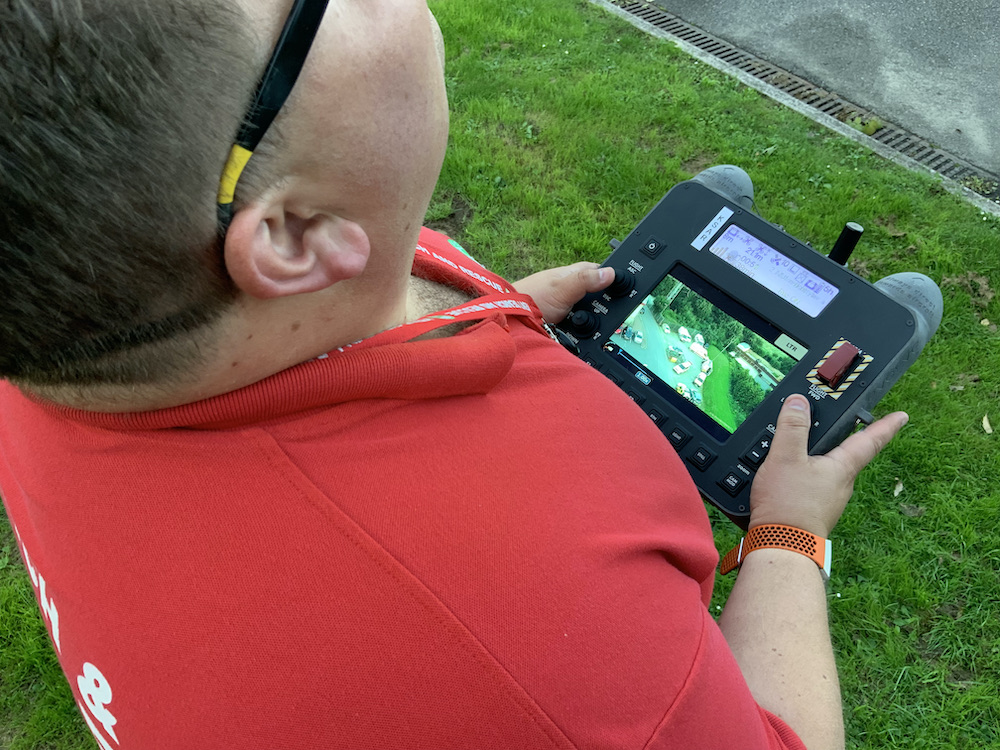 Drone Search Teams are made up of search technicians that have qualified as Pilots and Spotters, and have also successfully completed the various relevant qualifications unique to each.
The boat search team uses Drones, to undertake searches over all types of terrains during the day or night.
Drones plays a significant role in many of our searches here in Kent because we have so many different types of terrain and features.
The members of the team that operate the drones are made up of search technicians that have also qualified as commercial drone pilots via the A2 CofC which is a Civil Aviation Authority (CAA) qualification to operate drones in the Open Category.
The Team Leader will be a qualified Team Leader and also hold the appropriate qualification to the team they are leading.
Any number of drones can be deployed subject to rules, regulations and flight restrictions.
Drones are operated by two search technicians…
- Drone Pilot (take-off, flight, landing, camera operation)
- Drone Spotter (maintaining line of sight, spotting for any relevant dangers to flight to the drone and others)
The Drone Pilot is usually a Team Leader.
Sonar search teams are required wherever we need to locate a body or item underwater
 Sonar Search Teams are made up of a variety of different roles from other Search Teams:
- Boat Handlers for the Rigid power boats (rib) who has successfully completed this qualification;
- Spotter who has completed this qualification as well as water awareness and boat safety to keep an anything in and around the boat that may pose a danger or threat to the boat, the sonar equipment and the team;
- Sonar Operator who has completed this qualification as well as water awareness and boat safety;
- Sonar Viewer who has completed this qualification (works on dry land, not from the boat).
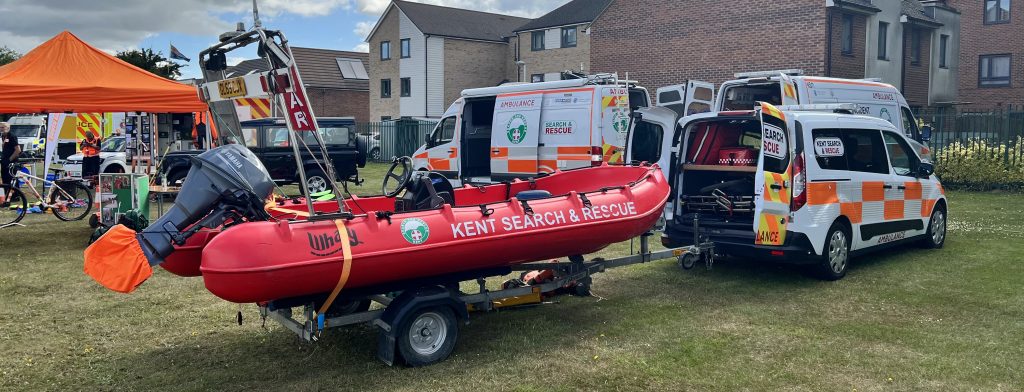
The Sonar team can use either the Rigid Power Boats or the Inflatable Boat as a platform for the sonar equipment to undertake searches of ponds, lakes, canals, reservoirs, streams, rivers etc. The latter will be suitable where bodies of water are shallow or difficult to launch in.
Water plays a significant role in many of our searches here in Kent because we have many bodies of water and unfortunately people will fall in and drown. They need to be located and recovered.
The sonar team is critical to all searches involving water.
The Team Leader will be a qualified Team Leader and also hold the appropriate qualification to the team they are leading.
The boat teams always work in the Hot Zone and thereafter always have to be wearing appropriate Protective Personal Equipment [PPE].
The sonar team can be made up of any number of craft.
- Team Leader (searching, managing & navigation)
- Search Technician (searching, radio operator & medic)
- Sonar Operator (setting up and operating the sonar equipment, directing the boat operator)
- Sonar Viewer (works on dry land, not from the boat)
The Sonar Team has the following equipment:
- Fixed sidescan & 360 sonar;
- Towed sidescan sonar;
- Blueview sonar which can be used from the waters edge or from a boat (Deployed by members qualified to operate in or around water).